The Long Misdirection
How Project 2025 Is Quietly Reshaping America

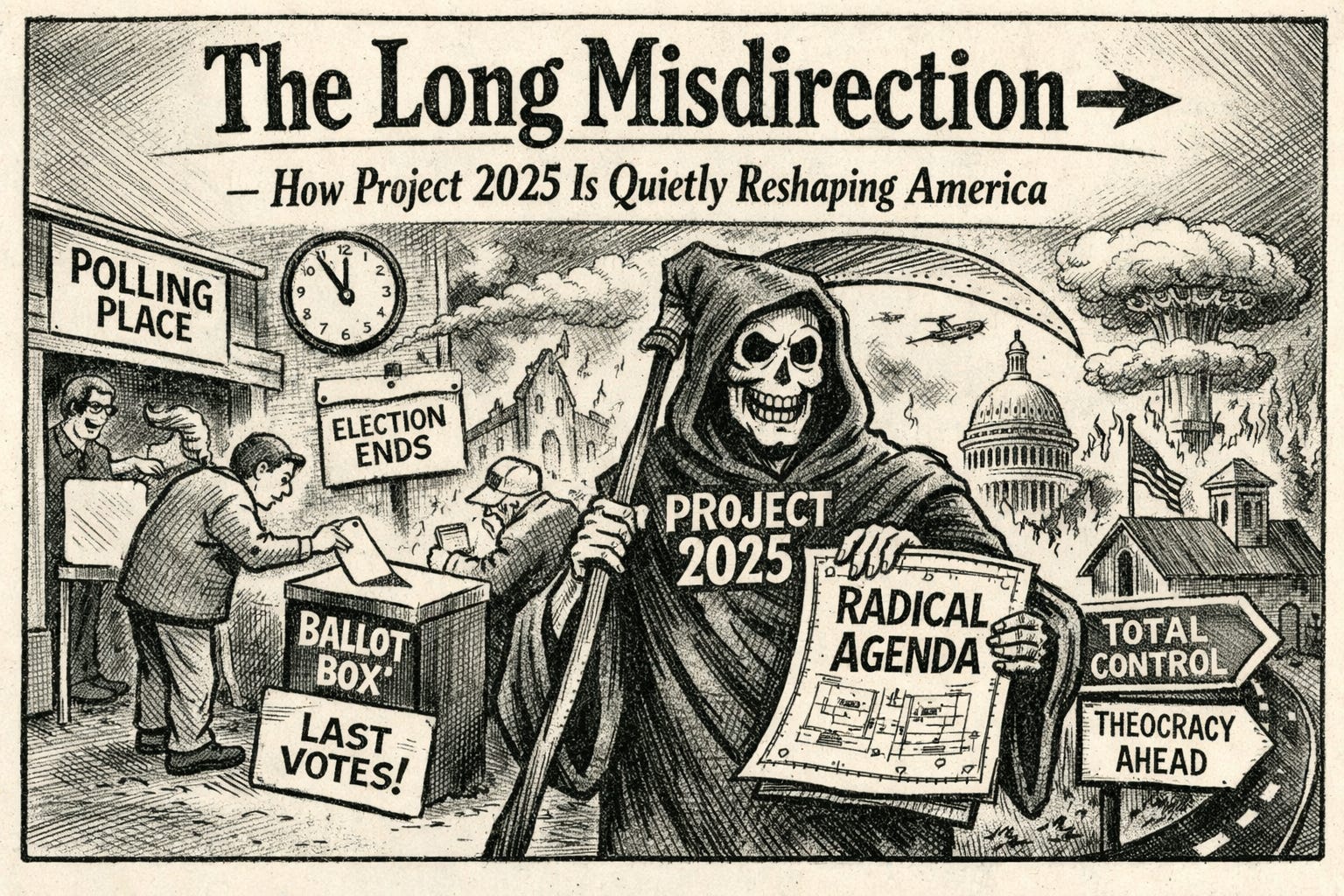
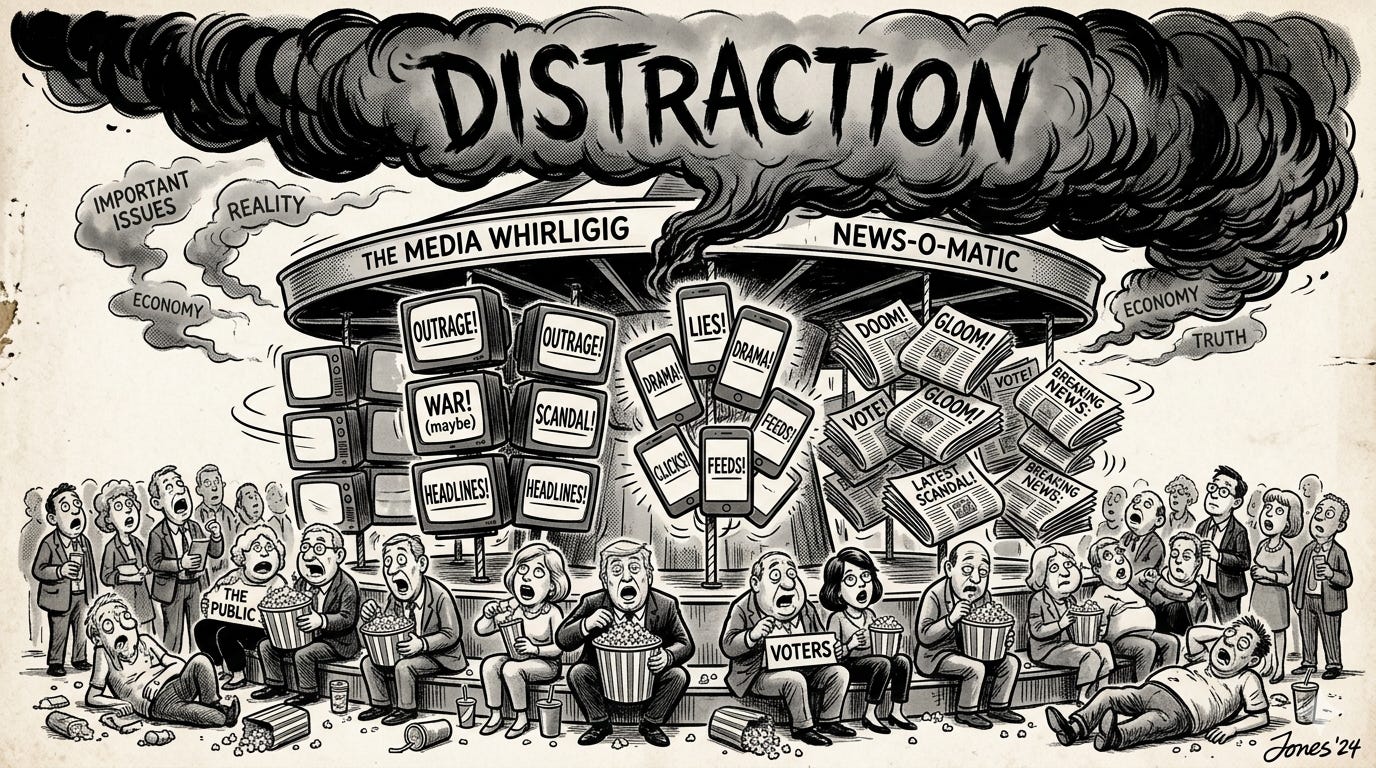
There’s a trick so ancient it probably pulled a fast one on the dinosaurs. The magician flails one hand like it’s auditioning for interpretive dance, “Look here! No, here! Yes, me!” while the other hand sneaks off to do the real work, smooth as butter and twice as slippery. No audience, no matter how smart or suspicious, escapes it every single time, because human attention is a tiny, fragile thing, and chaos is the most accomplished pickpocket ever to wear a metaphorical top hat.
What’s happening isn’t normal, and it sure as shit isn’t a rough patch in the democratic cycle. This isn’t just populism on autopilot. It has a name, it’s in the history books, and the experts (the historians buried in the dusty files of Weimar Germany, the scholars tracking Mussolini’s slow-motion takeover of Italy, the analysts watching Orbán politely dismantle Hungarian democracy while Brussels pens yet another sternly worded love letter) aren’t exaggerating. They’re just calling it like it is.
Its name is authoritarianism, and it’s arrived in a boxy suit and a too-long tie, hunched over a glowing phone at 2 a.m, where “glad he’s dead,” threats against opponents, calls for prosecutions, and live commentary on war all blur together into a single, relentless broadcast.

THE NUMBERS NOBODY IS TALKING ABOUT
Let’s kick things off with a statistic so important it should’ve been splashed across every front page in the democratic world, but instead got shoved into the corner like Eric Trump at a family dinner party, completely drowned out by the week’s freshest batch of manufactured drama.
In just twelve whirlwind months, the Trump administration managed to check off 53 percent of the ambitious Project 2025 domestic policy to-do list, because who needs small goals? That’s 283 out of 532 recommended actions already ticked off or revving up, like a political speed-run where the only loot drops are policy changes. The Heritage Foundation ( the hair-brained trust of the American hard right trying to drag America back to the 1920s) penned this “transition blueprint,” a governing manual, a roadmap for a federal makeover. It’s being carried out with such methodical precision you’d think the chaos swirling around was just a smoke machine for dramatic effect.
Trump distanced himself from this document during the campaign, not just once, but over and over, with the kind of theatrical gusto he usually saves for topics he’d like to bury six feet under. He announced to the nation that he hadn’t read it (shocking no one, given his alleged literary repertoire begins and ends with Mein Kampf), had no desire to read it, and was in no way involved.
Twenty-five of the forty masterminds behind Project 2025 were alumni of his first administration, and now many have snagged VIP seats in the sequel. Their magnum opus ( which Trump apparently skipped like a bad book club pick, that even an Oprah sticker wouldn’t save) has somehow become the unofficial instruction manual for running the country. The lie was about as subtle as a marching band in a library, but the execution? Positively Broadway-worthy.
This is what the magician’s other hand was up to while everyone bickered over Greenland and juggling tariff tantrums, watching allies stockpile plans for disasters they couldn’t dream up, cheering on the Justice Department’s grudge matches, binge-scrolling through wars in high definition, and quietly, sneakily, rearranging the government.
CONSTITUTIONAL FAILURE
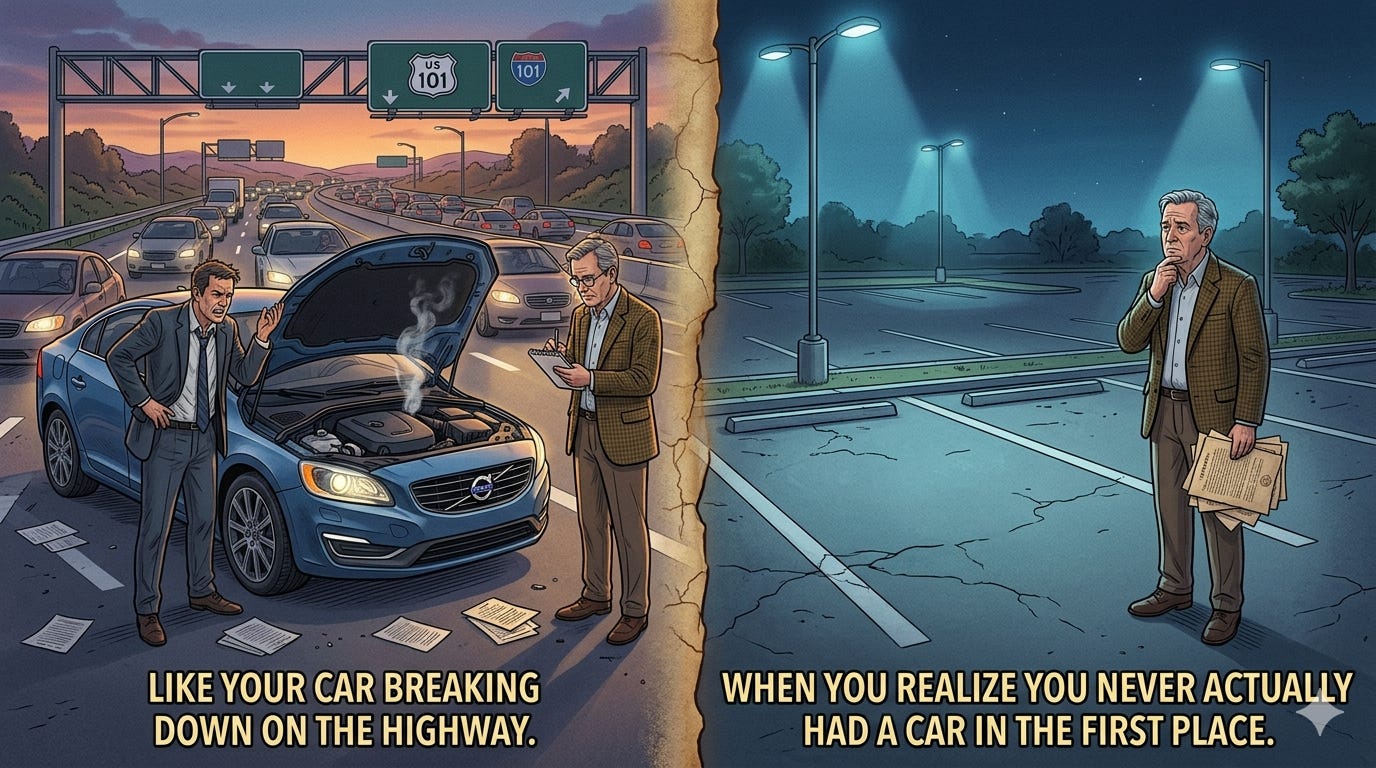
Stanford historian Jack Rakove and others have been urgently pointing out an important yet overlooked distinction: a constitutional crisis is like your car breaking down on the highway, while constitutional failure is when you realize you never actually had a car in the first place.
A constitutional crisis is a confrontation where two branches of government are in open conflict. A disputed election, a president, and a court squaring off across a procedural battlefield; these are acute events, they have beginnings and, usually, resolutions. Constitutional crises are alarming but manageable. The system fights them off, like a fever.
Constitutional failure is different its not an event, Its a condition that describes a state in which the relevant institutions ( the Congress, the judiciary, the civil service, the press, the independent agencies) have systemically ceased to fulfil their constitutional functions. Not because they were outright obliterated, but because they were slowly declawed, bagged, spooked, or tricked into helping shrink themselves, like a magic act gone wrong, one awkward step at a time.
This isn’t a constitutional crisis; it’s more like the Constitution tripped over its own shoelaces and landed face-first in a mess. And that’s a big difference, because helping someone up from a stumble is a lot easier than bringing them back when they’re completely out cold.
Think about what’s happened to the institution Americans have long seen as the ultimate protector of their rights: the federal judiciary. By credible accounts, the Trump administration openly disregarded or defied one out of every three rulings against it. Deportation flights took off despite court orders to stop. People were put on planes and sent to foreign prisons even as federal judges issued emergency halts that went ignored. Even the Solicitor General ( the government’s own lawyer before the Supreme Court) was credibly accused by a federal judge of misleading the justices about whether the government was following earlier orders.
When the Supreme Court ( stacked with Trump’s own appointees to build a conservative supermajority) ruled six to three in February that his tariff spree had gone beyond constitutional limits, he marched into the White House briefing room and accused the justices of being unpatriotic, disloyal, and apparently on some foreign payroll. Proclaiming his shame in them like a disappointed dad at a school talent show, he then whipped out a new executive order, slapping on even more tariffs before the microphones had cooled.
“He who saves his country does not violate any law,” Trump posted on social media, quoting Napoleon Bonaparte. He wasn’t joking; he was stating his theory of governance.
JD “Smokey Eye” Vance, the incredibly weird Vice President of the United States, laid it out with all the subtlety of a marching band in a library: “Judges aren’t allowed to control the executive’s legitimate power.” This wasn’t framed as an argument or a debate point; it was delivered like a royal proclamation, minus the crown but with plenty of eyeliner.
What happens ( legal scholars have been asking with increasing desperation) if the administration simply refuses a direct Supreme Court order? Not through legal manoeuvring, not through lawyerly reinterpretation, but a flat, explicit refusal? The answer, offered by experts across the political spectrum, is some variation of: we don’t have the slightest clue, the mechanisms for enforcement run through the Justice Department, which the president controls, and if he directs it not to comply, the courts become what one 1911 Supreme Court ruling called boards of arbitration whose judgments are merely advisory. They become, in a word, decorative.
Legend has it that when Andrew Jackson heard the Supreme Court had nixed his plan to boot the Cherokee Nation, he smirked and said, “John Marshall has made his decision; now let him enforce it.” Cue the Trail of Tears, a grim sequel nobody wanted, but everyone got. The precedent? Oh, it’s real, and somewhere in important rooms, it’s getting the kind of attention usually reserved for rare wine or scandalous gossip.
THE DOJ IS A WEAPON, AND THE TARGETS ARE REAL
This isn’t some hypothetical thought experiment; real people are getting steamrolled. The Department of Justice, once shielded from presidential meddling by a century of bipartisan etiquette, now plays political whack-a-mole so blatantly that the administration doesn’t even bother with the fake mustache and sunglasses anymore. Former FBI Director James Comey is facing prosecution, as is former National Security Advisor John Bolton. New York Attorney General Letitia James, known for investigating Trump’s business dealings, is also being prosecuted. Congressional candidate Katherine Abughazaleh and sitting Representative McIver are likewise facing charges.
The Lawfare Litigation Tracker ( which monitors legal actions involving the Trump administration with the granular obsessiveness of people who understand what they are watching) currently lists six criminal prosecutions brought by the Department of Justice against individuals who, in various ways, previously opposed or investigated Donald Trump. The prosecutions might flop spectacularly in court, but that’s hardly the point. Their true mission is more like a very expensive, very public warning sign: “Think about opposing us? Here’s a sneak peek at the bill!” It’s less about winning legal battles and more about handing out complimentary stress headaches to potential dissenters.
This is the Führerprinzip ( a term that prominent legal commentators are now using with uncomfortable frequency ), the principle that loyalty to the leader supersedes fidelity to any institutional norm, any legal constraint, any oath taken to a constitution rather than a person. Some of these commentators are conservatives, some built their careers defending executive power, and even the co-founder of the Federalist Society has publicly said that what’s being built isn’t constitutional government but the rule of an elected Napoleonic strongman. These aren’t just minor details; they show just how far this has gone beyond normal conservative governance.
THE HOLY WARRIORS
There’s a story that hasn’t gotten much attention, partly because at first it sounds so extreme that it’s easy to dismiss as impossible. That gut reaction ( the one that says, “No way, not this”) is exactly what authoritarians count on. The crazier a scandal sounds, the more likely it is to slip through the cracks of the news cycle.
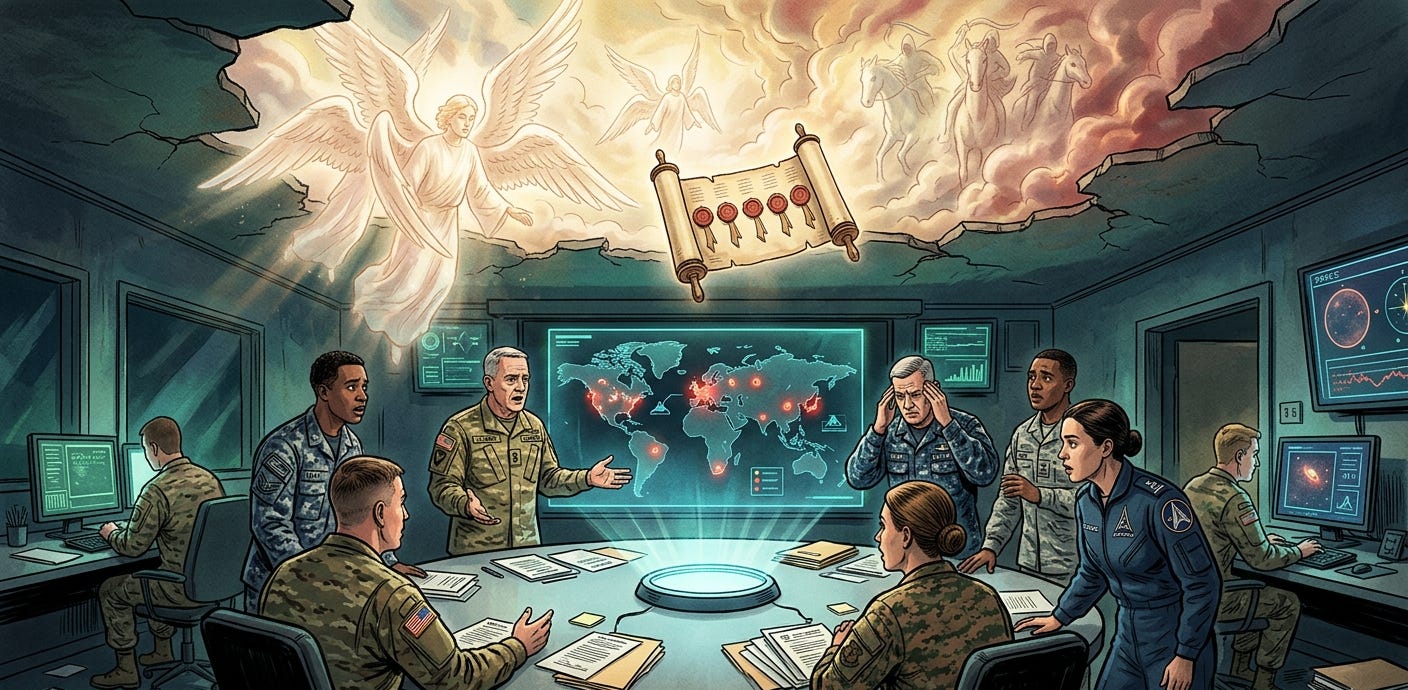
So, soldiers across all five branches of the United States military ( army, navy, air force, marines, and space force) have filed formal complaints, more than two hundred of them, reporting that commanding officers are framing active combat operations in Iran as divine prophecy. As missions to bring about the Second Coming of Jesus Christ (Not sure what bible they are reading, more likely a message from some God-damned prosperity preacher). During briefings to NCOs at over thirty military installations, one documented complaint recounts a combat unit commander telling his non-commissioned officers that Donald Trump had been “anointed by Jesus to light the signal fire in Iran, triggering Armageddon and heralding his return to Earth.”
This isn’t some fringe case or a lone chaplain at a far-off base. The Military Religious Freedom Foundation, known for its careful documentation and measured approach, has reported these complaints. They span multiple units, branches, and locations, a terrifyingly clear sign of a culture shaped from the top, not just a local issue bubbling up from below.
The culture was shaped by Pete Hegseth, who plays the role of a holy warrior while leading weekly Bible studies at the Pentagon, although again, I can’t help but wonder what book he’s actually thumbing through. The chapters on honesty, restraint, and personal conduct seem to have been quietly filed under “optional,” even as he zealously edits history into gospel.
Hegseth’s theology, along with what’s making the rounds in military briefings nationwide, seems to come from a brand of Christian nationalism whose “end of the world” game plan involves a cataclysmic showdown in the Middle East, the obliteration of Iran (and Israel), and, for the grand finale, the total annihilation of the Jewish people, apparently all just to set the stage for Christ’s big return, as if it were the ultimate Nazi doomsday cult. This isn’t some fringe conspiracy; it’s straight from the playbook of prominent evangelical leaders like John Hagee, whose Christians United for Israel group has been rubbing elbows with top Republicans for decades. The plan? Cheer for Israel so it can meet its fiery end, all in the name of fast-tracking Armageddon and ticking off that prophecy checklist. With rumors of a secret underground city serving as the government’s doomsday bunker, and every billionaire lounging in their own luxury apocalypse hideout, it really makes you wonder, are they in on some cosmic joke the rest of us didn’t get invited to?
War criminal Benjamin Netanyahu has nurtured these alliances with the precision of a chess grandmaster, but now finds himself cast as the unwitting star of a fiery theological finale, while soldiers schooled in this apocalyptic script man the controls like it’s opening night at the world’s most brutal snuff movie.
ONE HUNDRED AND SIXTY-EIGHT CHILDREN
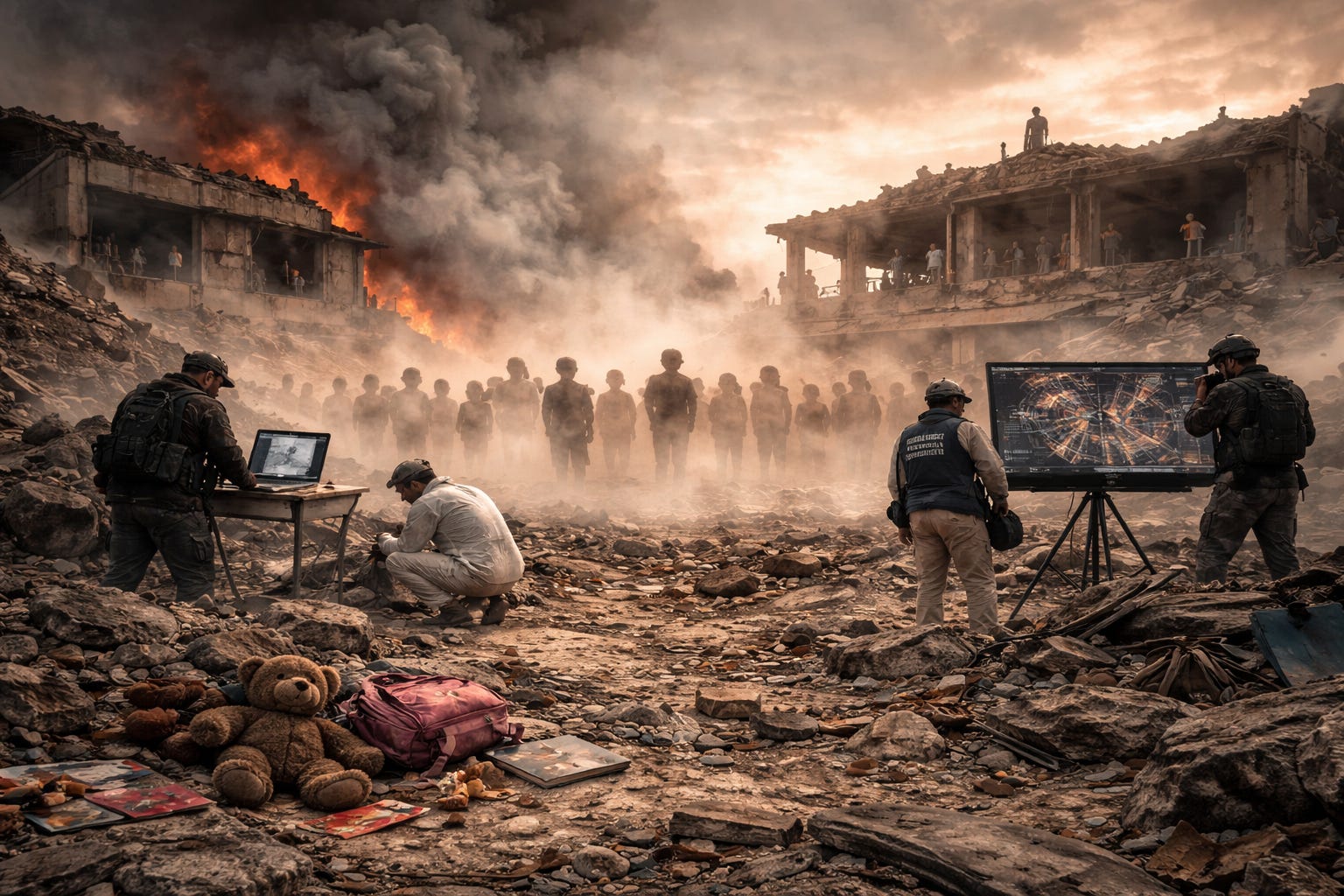
What better way to bring about the apocalypse than the events of February 28th, 2026, when a missile struck the Shajareh Tayyebeh Girls’ Elementary School in Minab, Iran. The attack claimed the lives of 168 people, more than a hundred of whom were children. The New York Times, the BBC’s verification unit, NPR, and CBC all conducted investigations. Several independent forensic teams analyzed physical evidence, satellite images, flight paths, and blast patterns. Together, they concluded that the United States was almost certainly responsible. The Pentagon’s preliminary review revealed the strike was courtesy of some seriously stale targeting data. The school had parted ways with its IRGC neighbor between 2013 and 2016, yet somehow managed to cling to its “military building” status on American kill lists like an old email in a forgotten spam folder for over a decade.
For a decade, the targeting data was horrifyingly off, so off it could’ve been aiming for Mars and hitting the moon instead. Yet, somehow, no one thought to take a peek and double-check. In a plotline fit for a Naked Gun movie, Trump declared (without a single scrap of evidence) that Iran had taken up the baffling hobby of using itself as a bullseye, launching a missile purely for self-inflicted target practice.
No congressional hearings, no senior generals swearing on the record, and not a single secretary of defense explaining how a school of girls landed on a targeting list and somehow kept the reservation for ten years. The saga fought for front-page space against a cabinet firing, a trade war plot twist, a double feature of executive orders, and the latest episode of “As the Truth Social Turns.”
This is what chaos costs: not just attention, but a tab we never seem to pay. Atrocity doesn’t sneak in because we stop feeling; it waltzes in while we’re busy rubbernecking at the next shiny disaster. When the news spins faster than our collective conscience, each fresh outrage elbows the last offstage before it’s even had its trial, and soon, the horrors stack up like unread emails, and the children of Minab are reduced to a bullet point in the world’s most depressing newsletter.
Meanwhile, tucked away in legal mumbo-jumbo and military PowerPoints, the magical framework that makes all this possible is still chugging along. The administration’s top-secret Justice Department memo (essentially declaring that America is at war with drug cartels and that anyone caught in the crosshairs is now an “unlawful combatant,” conveniently outside the warm, fuzzy blanket of legal protection) remains firmly in place. In other words, lethal force without the bothersome hurdle of a judge’s say-so. Thirty-five strikes later, with one hundred and fifteen officially worse-off individuals before Minab, this legal setup isn’t some short-term, break-glass-in-case-of-emergency fix. Nope, it’s settling in like that odd lawn ornament your neighbor stuck out five years back; you might not like it, but it’s clearly not going anywhere.

THE ARCTIC TRIPWIRE
Somewhere on a frozen airfield in Greenland, Danish soldiers stand ready to blow up their own runways: not to halt a Russian charge, nor fend off a Chinese landing, but to keep American planes from touching down, like the world’s frostiest game of “No, you can’t sit here.” In early 2026, Operation Arctic Endurance sent troops from Denmark, France, Germany, Sweden, and Norway to Greenland, bringing along demolition explosives, runway-denial gear, and blood supplies for treating combat injuries. Officially, it was called an exercise, but no serious analyst buys that explanation.
Denmark, one of NATO’s twelve founding members, saw its soldiers give their lives in Afghanistan alongside American forces after the September 11 attacks. The alliance forged through that shared sacrifice ( the most successful military pact in modern history, the framework that has kept Europe safe for nearly eight decades) is now the very structure Denmark is using to plan operations aimed at preventing an American military landing.
Read that again. Slowly. Feel the weight of it.
When Trump stood at the United Nations in his first term, wagging a rhetorical finger at allies, demanding NATO cough up more cash, and labeling the alliance members cowards on Truth Social as recently as March 20th, the international commentariat mostly treated it like a Broadway audition. Bluster in a suit. Outrage with a negotiation clause. Even when he started musing aloud about buying Greenland, snagging the Panama Canal, or redrawing American borders with a Sharpie ( possibly backed by force), the diplomatic consensus was a collective shrug: he’s just kidding… probably. He wasn’t joking; the proof is right there: a Danish soldier clutching a detonator in the snow.
The post-World War Two international order was built on one big idea: the United States, having watched the chaos caused when great powers played real-life games of “Risk” with their neighbors’ land, would promise not to grab any territories itself. The American security guarantee used to be as solid as grandma’s fruitcake, unconditional and applied to everyone, especially the big shots at the table. But now, that trusty premise has vanished like socks in a dryer. The Greenland deployment isn’t just a hiccup in diplomacy; it’s the gravestone, complete with a somber epitaph and maybe a tiny carved snowman.
THE LOCK ON THE DOOR
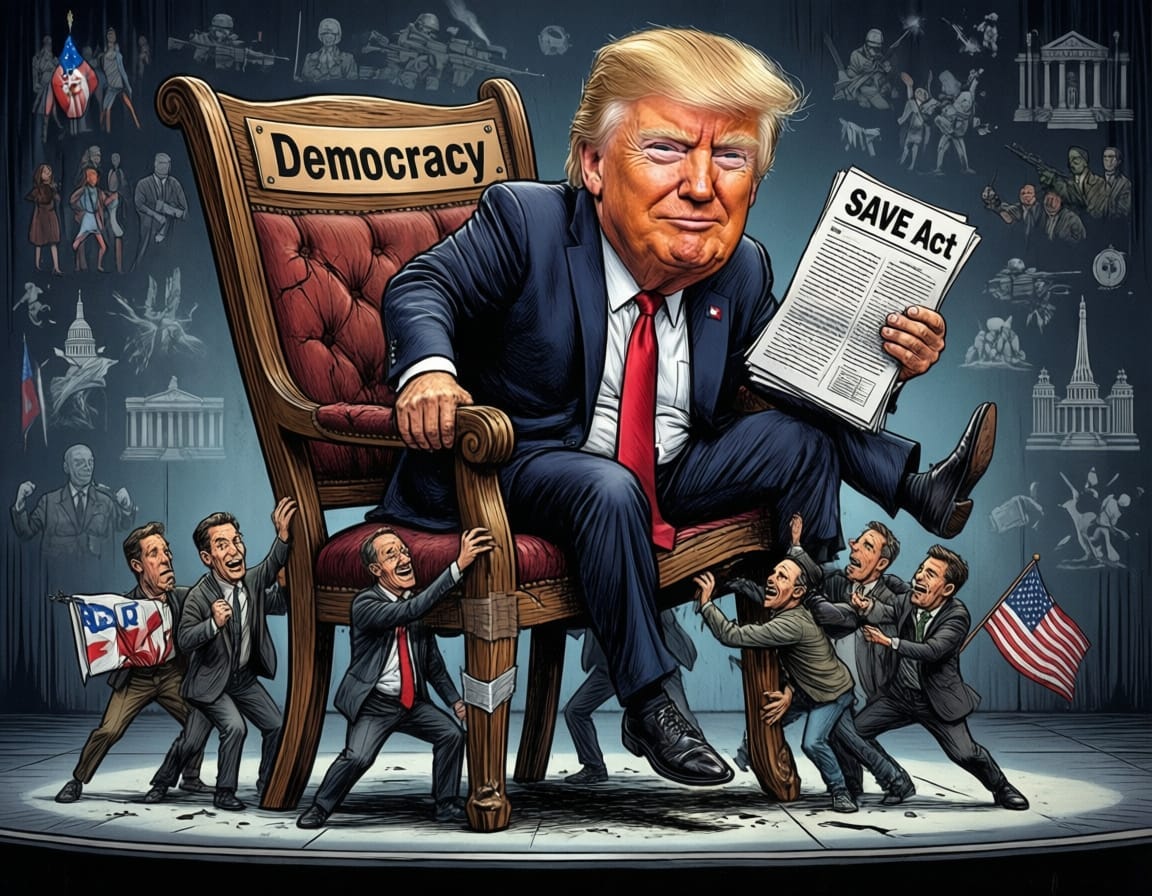
Everything we covered above ( the institutional capture, the politicised justice system, the militarised theology, the war crimes, the alliance collapse) exists within a political system that still, theoretically, provides the mechanism for democratic correction. Elections, courts, congressional oversight, and the press are democracy’s four-legged chair. It’s currently extremely wobbly; some legs are cracked, one’s held together with duct tape, but hey, it’s still standing… for now.
The SAVE Act is essentially a scheme to bench the opposition indefinitely. Trump, in his trademark aversion to subtlety, blurted it out in public without so much as a theatrical gasp: if it passed, Republicans could coast for the next half-century without breaking a sweat in a national election. This wasn’t exaggeration (because that would require a touch of self-awareness) but rather a masterclass in blunt-force political arithmetic, served up with all the grace of an orange bull in a democracy shop.

About twenty-one million Americans don’t have official documents proving their citizenship on hand, and around 2.6 million lack any form of government-issued photo ID. The groups most represented in these numbers are, without exception, the ones least likely to vote Republican: low-income individuals, Black and Latino communities, Native Americans, and ( notably) married women who’ve changed their last names. Women would now have to prove that the name on their birth certificate matches the one on their voter registration, because apparently, the concept of a married name existing precisely to stop you voting for a democrat!
The FBI has already carried out raids on election offices, and the DOJ has tried to pressure states into handing over voter registration databases. A legal framework for federal control of election administration is being built from several angles at once, with each part open to litigation but together forming a tight grip. Some locks can only be opened with the right key, and in this case, the key is the Senate filibuster. It takes sixty votes to break it, but Republicans have fifty-three. Trump is warning he’ll refuse to sign any legislation until the filibuster is gone. The only thing standing between the current situation and what could come next is four or five Democrat senators who haven’t decided if crossing that line is necessary for their political survival.
Four or five. That’s the kind of math you get when democracy’s space is shrinking faster than your favorite jeans after one trip through the dryer. The 2026 midterms might be the last election run under the “vintage rules” before the SAVE Act, filibuster fuss, voter database grab-and-go, and FBI election office surprise inspections finish their makeover. The result? Not so much a competitive democracy as a really shitty reality show with a predetermined winner, Trump.
THE SILENCE OF THE GUILTY
One of the more shattering realisations that emerges from sustained examination of this moment isn’t what the administration’s doing, it’s what the institutions that should be stopping them aren’t doing.
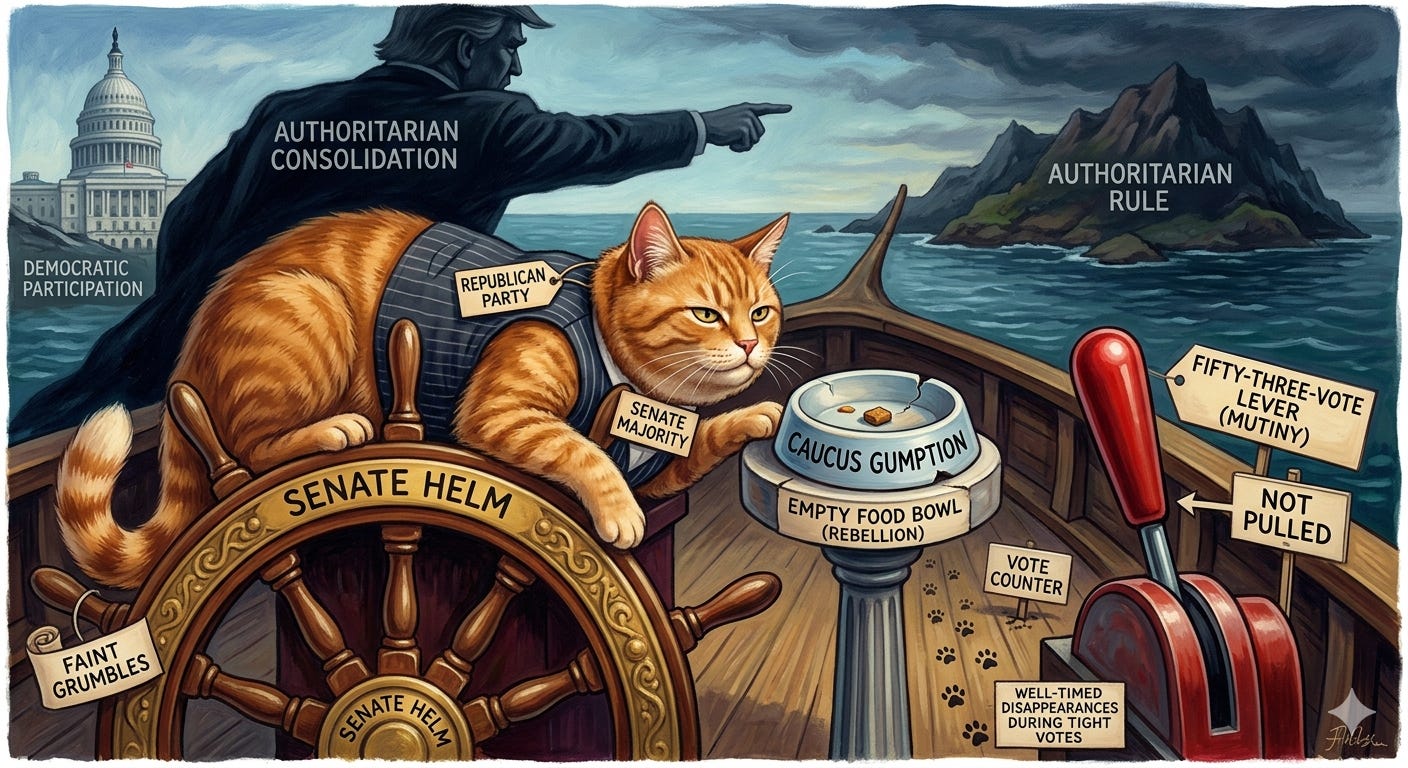
The Republican Party, firmly at the Senate’s helm, has shown all the rebellion of a cat mildly annoyed by an empty food bowl, some faint grumbles, and a few well-timed disappearances during tight votes. Yet there’s no grand mutiny, no dramatic pulling of the fifty-three-vote lever, no caucus with the gumption to declare: “Alright, that’s quite enough.” Political scientists, referencing the literature on democratic backsliding, describe the party as an enabling party, one that offers legislative support for authoritarian consolidation while keeping the outward framework of democratic participation intact.
This isn’t a new story; it’s happened before in countries that now serve as warnings. In Weimar Germany, centre-right parties backed Hitler’s rise to chancellor, thinking they could control and moderate him from within. In Hungary, the conservative establishment supported Viktor Orbán early on for similar reasons. The error wasn’t ignorance, but a rational, human choice to prioritize short-term political survival over long-term institutional health. Senators weigh their primary polls, the risk of Trump’s wrath, and the fate of those who’ve opposed him, then make their choice. It’s an understandable calculation, with catastrophic consequences.
The media, worn down by relentless attacks on its credibility and funding, fractured by the collapse of the ad-driven model that once sustained twentieth-century journalism, and pushed by algorithms to chase outrage instead of focusing on slow-moving structural issues, has been ( honorable exceptions aside) unequal to the moment. Not exactly dishonest or cowardly, but structurally unfit to cover an authoritarian project that thrives on the dull accumulation of changes, punctuated only by occasional spectacular incidents. No front page can sustain coverage of Project 2025’s implementation for the weeks it would take, when there’s always a newer outrage demanding attention.
And the Supreme Court ( three of whose current conservative justices were appointed by a man who they subsequently provided with near-total presidential immunity from criminal prosecution, in a decision that legal scholars from across the spectrum have described as one of the most consequential and damaging in the court’s history ) has shown a knack for tossing the administration some easy wins on the shadow docket, while now and then pulling the reins on the merits; creating more of a cheer squad than a watchdog. The tariff ruling was legit, but got ignored faster than free donuts in the break room.
WEIMAR, AND WHY THE PARALLEL ISN’T A LAZY ONE
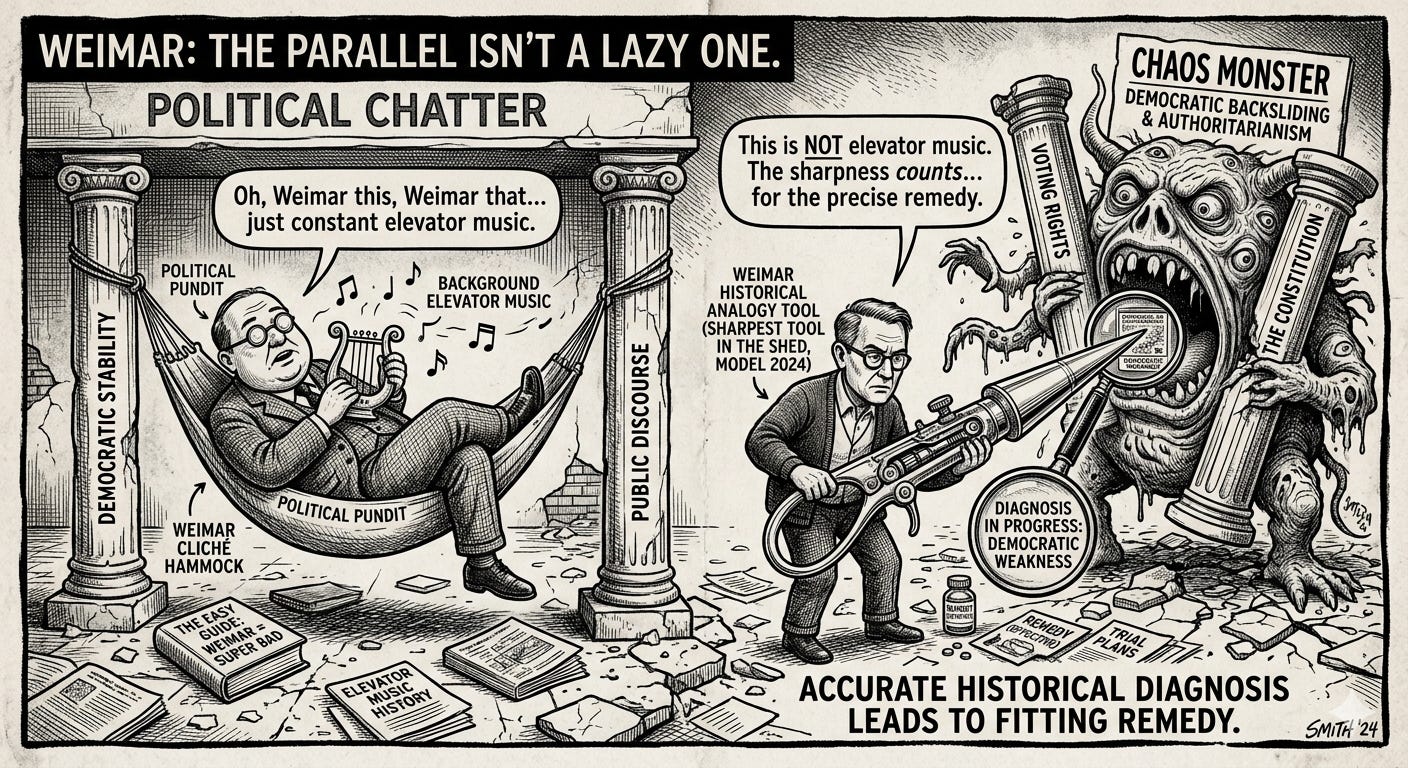
The Weimar Germany comparison gets thrown around so much these days, it’s like background elevator music; constantly playing until you forget it’s even there. It’s been repeated so often in political chatter that it now means little more than “super bad,” instead of serving as an actual historical analogy. This comparison isn’t lounging in a hammock; it’s, by any serious historical standard, the sharpest tool in the shed. And that sharpness counts, because the more spot-on the diagnosis, the more fitting the remedy.
The Weimar Republic didn’t fall due to an outside attack, but because its institutions were slowly taken over from within, step by step, in ways that seemed defensible individually but proved deadly together. The press wasn’t closed outright; it was bullied, drained of resources, and discredited until it began censoring itself. The courts weren’t torn down; they were stacked with allies, pressured, and eventually became complicit. The civil service wasn’t abolished; it was swapped out, loyalty by loyalty, for people chosen more for ideology than skill. The military wasn’t taken over in a coup; it was courted, praised, and given a belief system that made obedience feel like virtue.
The Deutsche Christen ( the German Christians) managed to rebrand National Socialist ideology as if it were a church bake sale for the Almighty, blessing the Wehrmacht with theological thumbs-ups and handing out moral hall passes so everyday believers could join in on monumental misdeeds. The tool wasn’t brute force, but a masterclass in storytelling, where horror was recast as holy work, and the soldier herding people onto trains wasn’t breaking commandments, just checking off items on God’s to-do list.
The differences between Weimar and today’s United States are as real as the gap between a tricycle and a monster truck. Two and a half centuries of constitutional culture give the system the turning radius of an oil tanker. Federal structures scatter power like confetti, unlike the tightly wound German state. The free press, though limping, is still kicking. The courts, though squeezed, haven’t thrown in the towel, just yet, and the midterms, though menaced, are still on the calendar.
The stark differences in institutional resilience make the comparison all the more alarming. If a system fortified by extraordinary safeguards ( a written constitution with 250 years of precedent, a federal structure, an independent press, and the most powerful military in history) can be brought to such a critical juncture in just fourteen months, then envisioning what comes next demands imagination as much as analysis. Let’s be honest thought if you can’t see it now, you won’t until it arrives at your door with an arrest warrant!
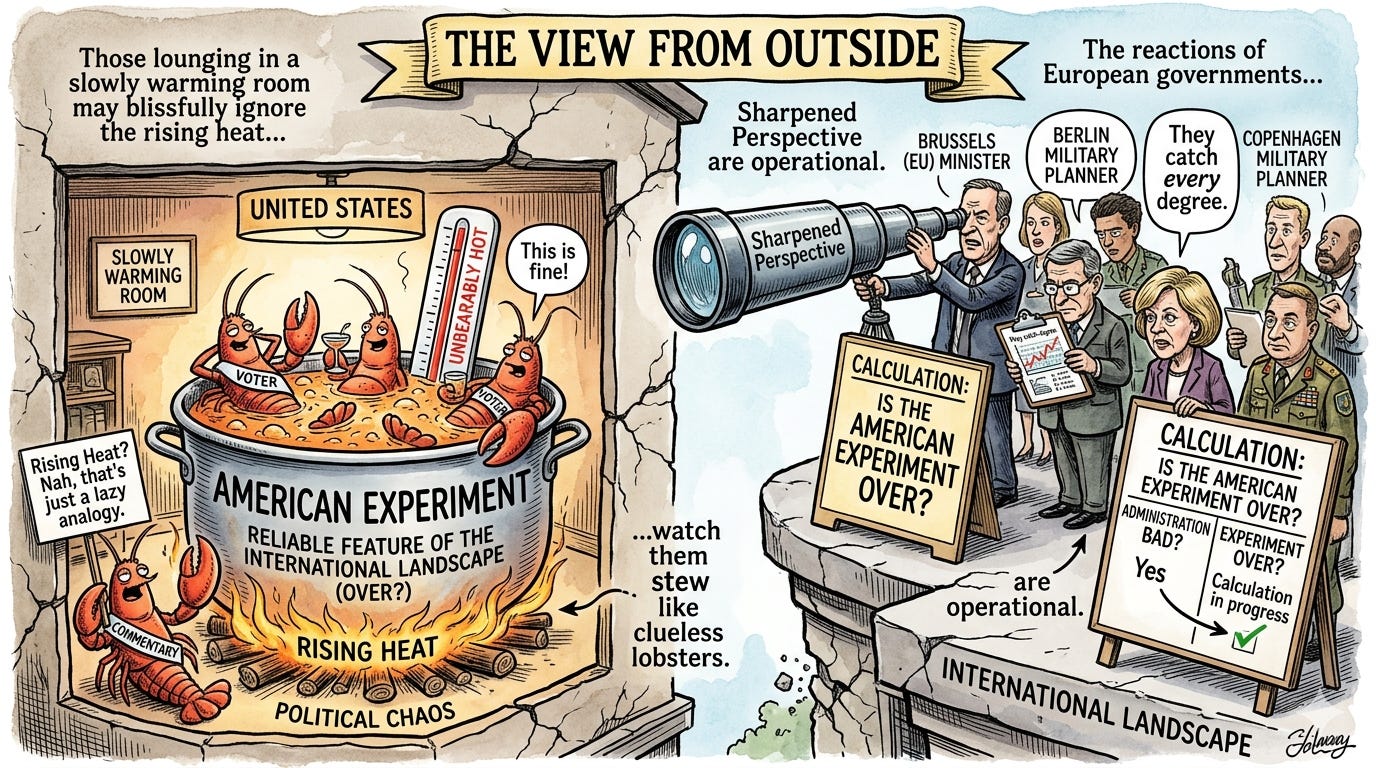
THE VIEW FROM OUTSIDE
Distance has a way of sharpening perspective. Those lounging in a slowly warming room may blissfully ignore the rising heat, while onlookers outside, watching them stew like clueless lobsters, catch every degree of it.
From outside America ( and the reactions of European governments, European military planners, and European foreign ministers are instructive here precisely because they are not rhetorical but operational), what is visible is something that American political commentary has been slow to name. The calculation being made in Brussels, in Berlin, in Paris, in Copenhagen, isn’t about whether the current American administration is bad; it’s about whether the American experiment, as a reliable feature of the international landscape, is over.
It’s a sobering thought. For the past eight decades, the United States has been the cornerstone of the Western-led international order. Not without flaws ( American foreign policy has had its share of disasters ), but still a structural constant. The idea that U.S. power, despite its missteps, was ultimately aimed at shared values like the rule of law, national sovereignty, democracy, and peacefully resolving disputes among allies has been the key support beam of the post-war framework.
That wall is cracked, maybe even all the way through. Danish troops are stationed in the Arctic, with French forces beside them, and German explosives experts near the runway, ready to blow it if needed. This isn’t some diplomatic gesture; it’s a practical response to the fact that the load-bearing wall is gone, and Europe now has to build its own.
What comes next in a world where American power has divorced American values, where the planet’s most high-tech military is run by folks convinced they’re fast-tracking the end times, and where legal guardrails are quietly shredded by secret memos no judge has ever eyeballed, is not exactly a bedtime story. It’s the question of our era, and it’s about as cozy as a porcupine in your pajamas.
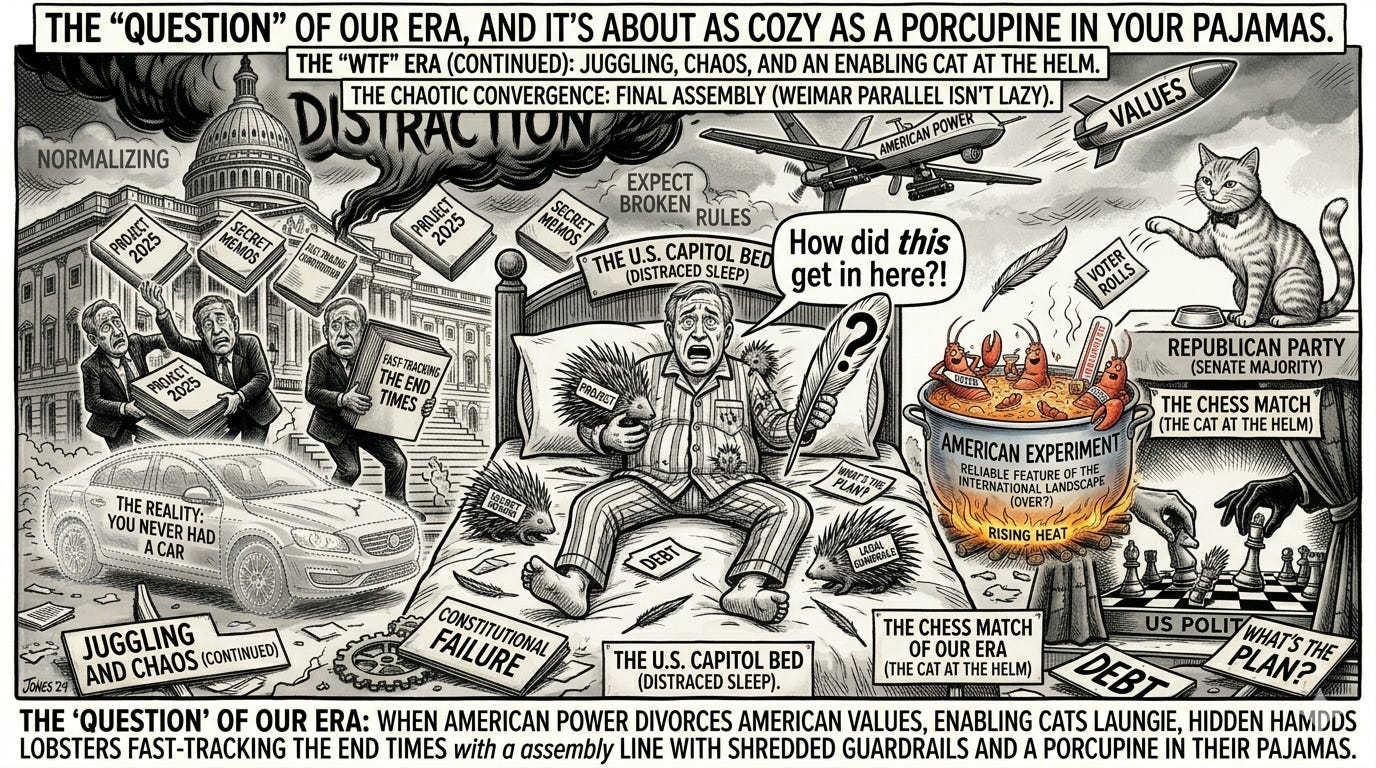
WHAT HISTORY ASKS, AND WHAT IT COSTS
Historian Timothy Snyder points out that the triumph of authoritarianism rarely happens in the most dramatic moment. Instead, it’s quieter, more a norm dropped without consequence, someone who might have spoken up choosing silence, a public conditioned through repetition to expect each broken rule to be followed by another. People come to believe outrage is endless, resistance is pointless, and the scale of the problem is beyond what any one person can change.
That taught helplessness is the final mechanism, the last piece of the architecture. Everything else ( the institutional capture, the legal erosion, the theological conditioning, the voting restriction, the defied court orders ) creates the conditions. It’s the helplessness that makes them last, and right here is where the darkness needs to be genuine. Not deceitfully pessimistic. Not overly optimistic. Just real.
The soldiers filing those complaints ( over two hundred of them, across every branch, at personal professional risk) are not helpless. They are documenting what is happening. They are creating the record. They are the people inside the machine who looked at what the machine was being used for and said: not in my name, not without a fight. The Danish engineers in the Arctic are not helpless; they’re doing what the moment requires, not symbolically but materially, with explosives and blood supplies, in the full knowledge that the decision to deploy them was the hardest decision a NATO ally has ever had to make.
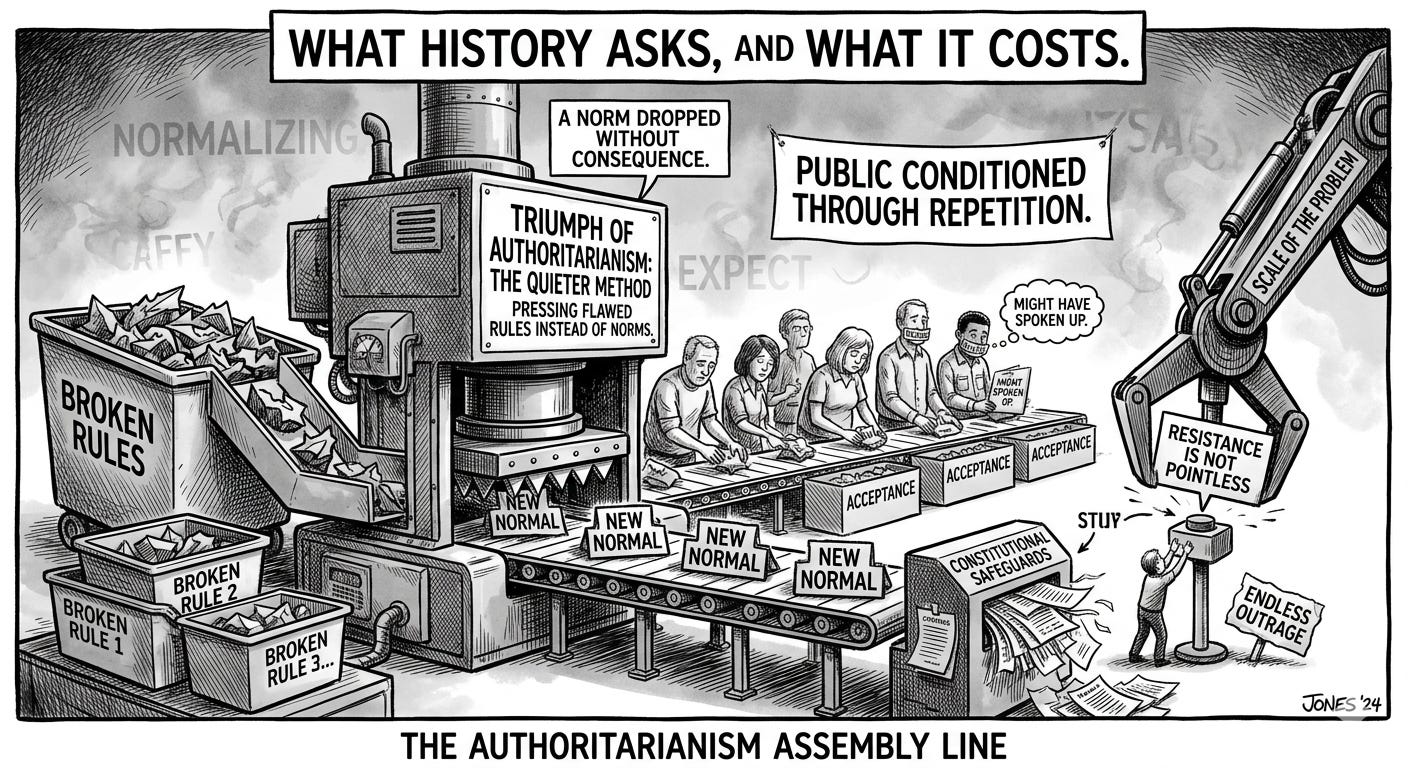
The judges ( including judges appointed by this very president ) who have blocked, frustrated, delayed, and documented the administration’s overreach in two hundred and thirty-three active cases are not helpless. They’re doing exactly what judges were made for: channeling their inner James Madison as an unshakeable bulwark. Sure, the pressure’s cranked up to “extraordinary,” but like a stubborn lawn gnome in a hurricane, they’re still standing.
Journalists who continue investigating, working in outlets surviving on limited resources, are still producing accountable, well-sourced, and verified journalism that allows pieces like this to be written with confidence in the facts; they’re far from helpless, and the people outside America ( in the United Kingdom, in Germany, in Canada, in Australia, in every country that has some leverage over American behaviour through trade, through diplomatic pressure, through international legal mechanisms, through the kind of public solidarity that reminds Americans that the world is watching and has not looked away ) they are not helpless either.
What history records is not the overwhelming force. It records the unexpected resistance, a document preserved when it should have been destroyed, a testimony given at personal cost, or the vote that held when it should have crumbled. The refusal ( silent, costly, and personal) to go along. Those refusals are happening right now, in hundreds of places, by people whose names will not be known until the histories are written. The big question is whether there are enough of them, and whether their trusty channels ( the courts, the press, the ballot box, and the ever-dramatic international community) can hang in there long enough for their combined resistance to pack a real punch. As for the answer? Let’s just say it’s still binge-watching the plot unfold.
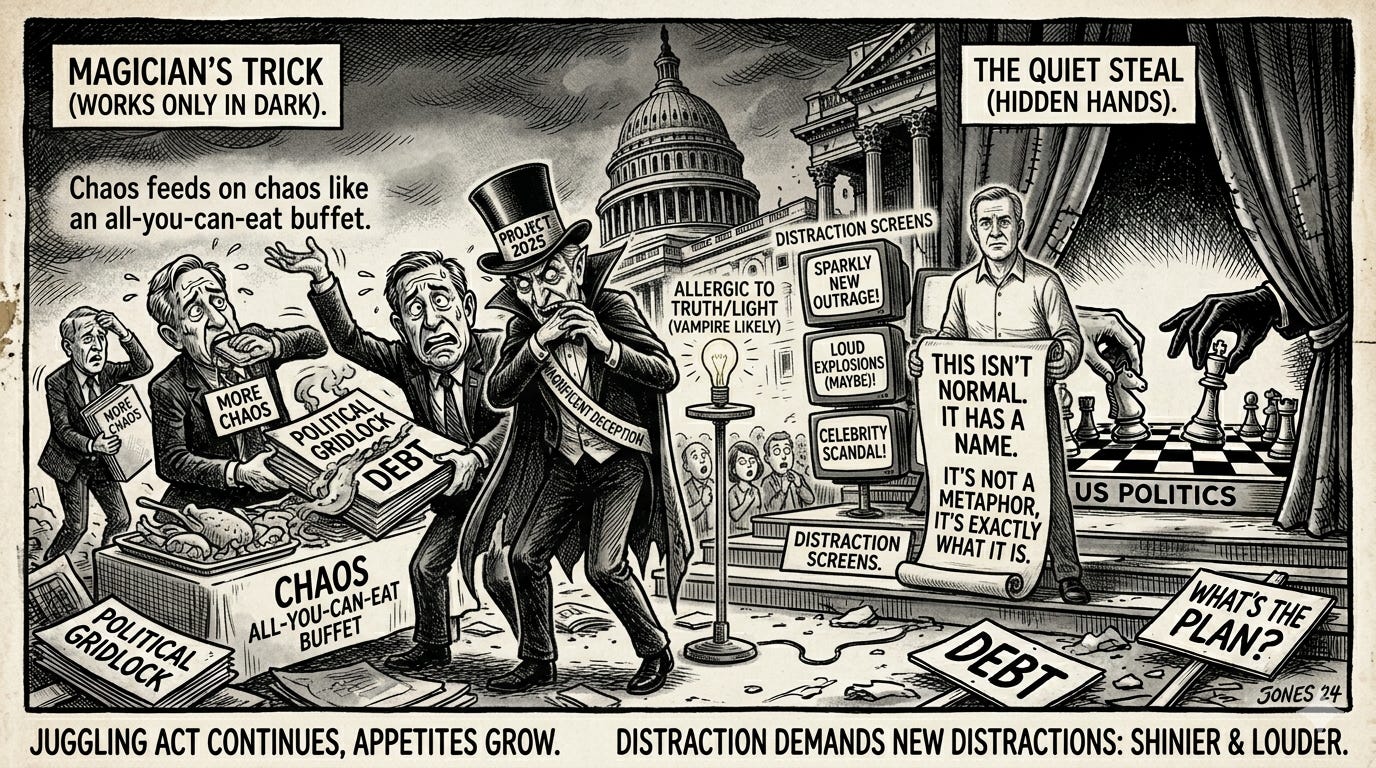
THE OBLIGATION OF CLARITY
The magician’s trick only works in the dark, because apparently he’s allergic to light bulbs, although he’s more likely a vampire. Chaos feeds on chaos like it’s an all-you-can-eat buffet. Distraction demands new distractions, preferably shinier and louder than the last, and normalisation thrives only when no one stands up to say, with absolute clarity. This isn’t normal, it has a name, and it’s not some charming metaphor; it’s exactly what it is.
The duty (for journalists, citizens, historians, or anyone awake enough to notice) isn’t optimism; leave that shit to motivational posters and cat calendars. Optimism is a luxury this moment couldn’t afford, even on clearance. The duty is clarity and precision, while staring straight at the mess without blinking. Calling what’s happening by its true name, even when it sounds like a horror movie title, even when doing so paints a target on your back, and even when the thing named feels like a runaway boulder you can only chase in bad shoes.
What history really shows, in case after case of democratic decline and authoritarian takeover, is that the difference between places that bounced back and those that didn’t was rarely due to military action, legal measures, or election results. Instead, it came down to the sum of individual choices made by ordinary people in the midst of the crisis and whether to go along with the normalization or to reject it.
The pile is growing like an unwashed laundry heap, as the refusals are stacking up like bad excuses at a Monday morning meeting. The record’s being kept, probably in a dusty ledger guarded by an evil troll (Stephen Miller suddenly sprang to mind). Meanwhile, the other hand is still at it, scribbling, waving, or possibly knitting; it’s never stopped, it’s like a teenage boy who has just discovered masturbation. But now, the crowd of peekers has multiplied like rabbits at a magic show, far surpassing the humble gathering from fourteen months ago, which consisted of a few curious onlookers and someone’s perpetually nosy aunt. In the only version of history that truly matters ( the one future generations will jot down while trying not to spill coffee on their notes), this grand display of synchronized gawking, fueled by the sheer stubborn courage to keep staring, is precisely where the outrageously dramatic saga of whatever absurdity comes next officially begins.
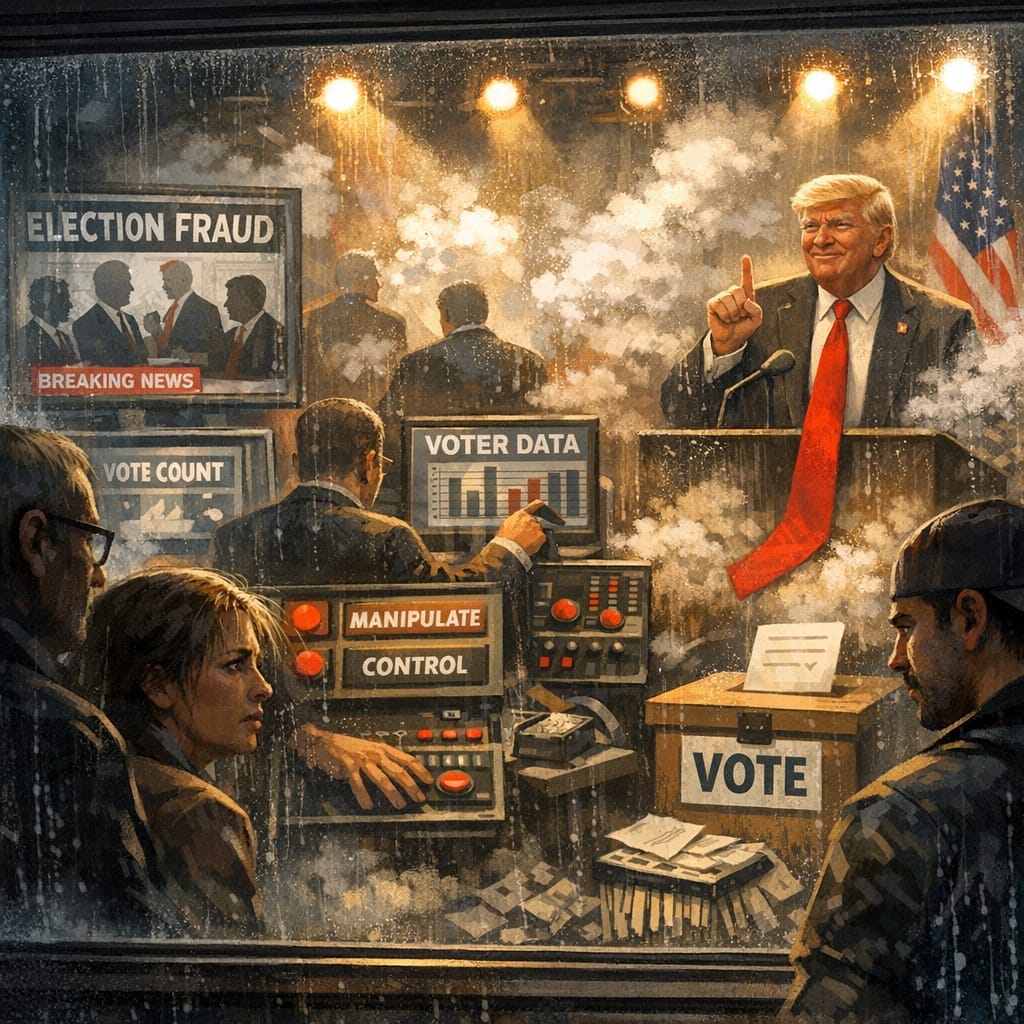
Project 2025 operates behind the scenes, with the Long Misdirection as its theater. Sensational headlines, political drama, and grandiose briefings are all just distractions while the real machinery ( deciding who votes and how those votes are counted) quietly runs. The apocalypse doesn’t always arrive with angels and trumpets; sometimes it’s a rigged election, complete with smoke machines and an overly long tie. The show isn’t over yet; the final act is only just getting started.
Sources
Amnesty International. 2026. USA/Iran: Those responsible for deadly and unlawful US strike on school that killed over 100 children must be held accountable. [online] Available at: https://www.amnesty.org/en/latest/news/2026/03/usa-iran-those-responsible-for-deadly-and-unlawful-us-strike-on-school-that-killed-over-100-children-must-be-held-accountable/ [Accessed 30 March 2026].
Britannica. 2026. Project 2025. Encyclopaedia Britannica. [online] Available at: https://www.britannica.com/topic/Project-2025 [Accessed 30 March 2026].
The Daily Beast. 2026. Pentagon Pete’s Jesus war talk freaks out troops. [online] Available at: https://www.thedailybeast.com/pentagon-pete-hegseths-jesus-war-talk-freaks-out-troops [Accessed 30 March 2026].
The Daily Beast. 2026. Pentagon Pete prays for ‘overwhelming violence’ at Christian service. [online] Available at: https://www.thedailybeast.com/pentagon-pete-hegseth-prays-for-overwhelming-violence-at-christian-service [Accessed 30 March 2026].
The Guardian. 2026. Hegseth prays at Pentagon service for ‘overwhelming violence’ against enemies. [online] Available at: https://www.theguardian.com/us-news/2026/mar/26/hegseth-prayer-violence-pentagon [Accessed 30 March 2026].
The Guardian. 2026. US troops were told war on Iran was ‘all part of God’s divine plan’, watchdog alleges. [online] Available at: https://www.theguardian.com/world/2026/mar/03/us-israel-iran-war-christian-rhetoric [Accessed 30 March 2026].
Military.com. 2026. Lawmakers want DOD, Hegseth investigated for biblical ‘Armageddon’ claims. [online] Available at: https://archive.st/archive/2026/3/www.military.com/daily-news/2026/03/06/lawmakers-want-dod-hegseth-investigated-biblical-armageddon-claims.html [Accessed 30 March 2026].
Time. 2024. What Is Project 2025? [online] Available at: https://time.com/6986995/what-is-project-2025/ [Accessed 30 March 2026].
Wikipedia contributors. 2026. Military Religious Freedom Foundation. Wikipedia, The Free Encyclopedia. [online] Available at: https://en.wikipedia.org/wiki/Military_Religious_Freedom_Foundation [Accessed 30 March 2026].
Wikipedia contributors. 2026. Project 2025. Wikipedia, The Free Encyclopedia. [online] Available at: https://en.wikipedia.org/wiki/Project_2025 [Accessed 30 March 2026].
Dribble.